build
Loop HQ
One person running many AI coding sessions across six products. Builders and independent reviewers, and nothing ships without a person.
at a glance
- What it is
- A way of running software work with several AI agents at once, steered by one person, and the status page that shows it all.
- My role
- Designed it and runs it.
- What I built
- One overview session coordinating cloud sessions across six products, builder agents, an independent reviewer that did not write the code, and hard stops before anything reaches production.
- Result
- It now runs the coding work across six products, with a person deciding every merge.
what i made
context
I was building with AI and running parallel tasks that just weren't moving fast enough. The loop now coordinates the coding work across six products. On Prizerv, cloud build sessions produced pull requests 2 to 13, and each went through an independent review and a fix round before a person merged it. On Slurrp Farm, a coordinator hands each round to a builder and an independent verifier, under a lock and with every round recorded in a ledger.
thinking
Keep builders and reviewers apart.
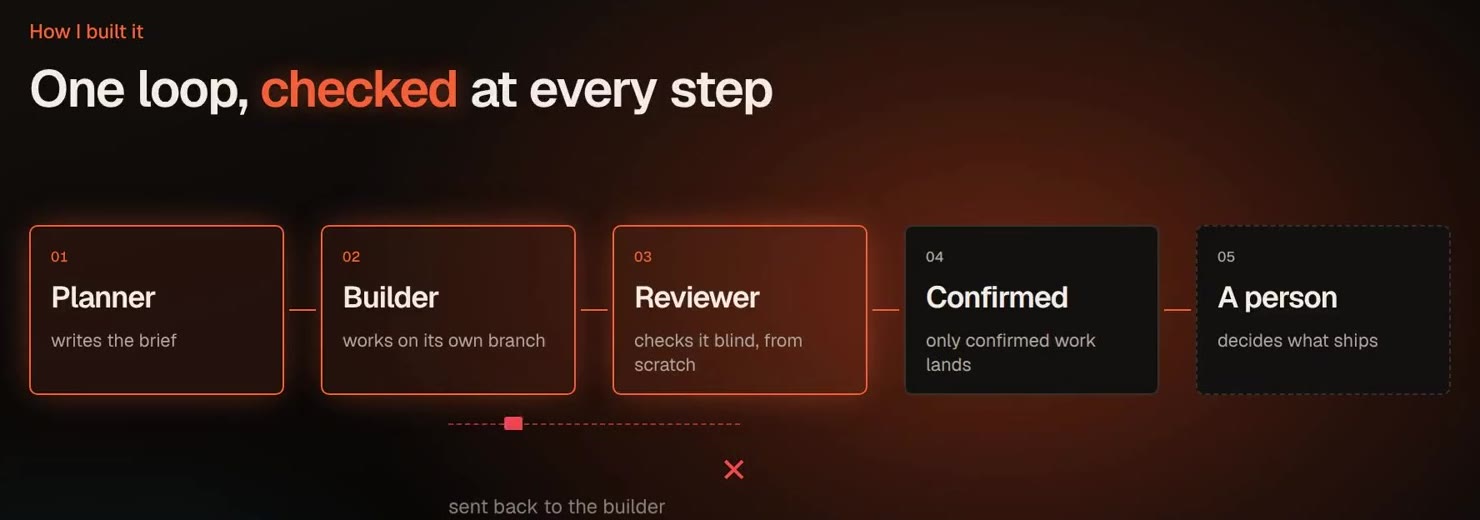
whyThe reviewer runs on a stronger model and is asked to find what is wrong, not to agree. It caught a builder falsely claiming a staging environment was missing, and a change that would have shifted a live button.
Stop at a pull request.
whyShipping to production is never the loop's call, so it can run for hours unattended without putting the live product at risk.
Stop rather than push on.
whyA task that fails a check twice stops and reports, the loop winds down at 90 per cent of a usage window, and hooks block unsafe pushes.
what i learnt
- The test is landed, verified work after hours away, not activity.
- The first unattended overnight run on Prizerv passed two tasks, one on its second attempt, and stopped cleanly at the wind-down.
- A review costs far more than the build it checks, roughly 400,000 to 600,000 tokens, so the loop is paced against the usage window.
- That cost is worth paying: the reviews are where the false claims and the regressions were caught.
outcomes
12
pull requests on Prizerv (numbers 2 to 13), each built, independently reviewed and fixed before a person merged it
in detail
One loop, checked at every step, and one screen that shows every AI session in it.
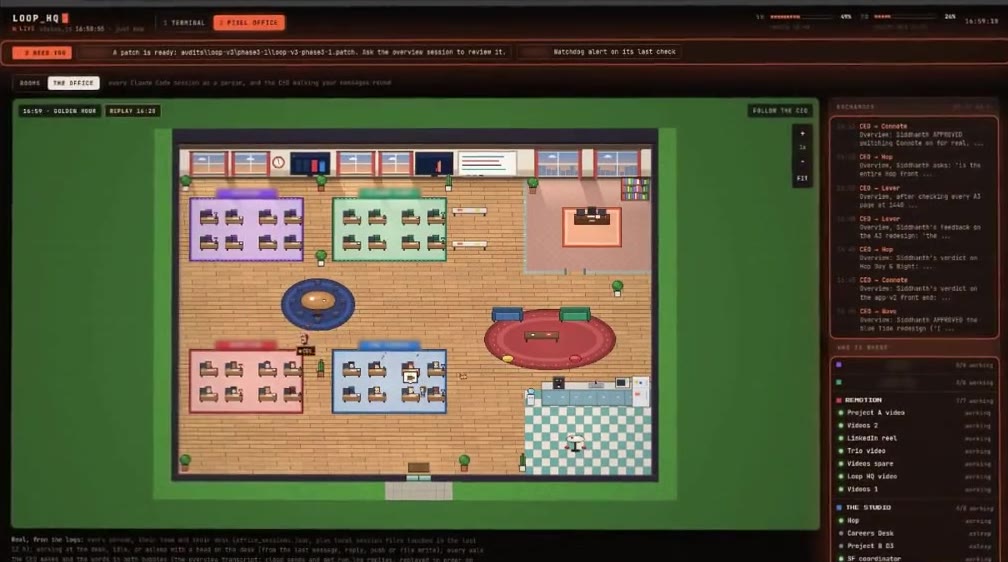
One screen for every AI session
Who is working, what needs a person and what just landed. It is read-only: it reads each loop's own logs once a minute.
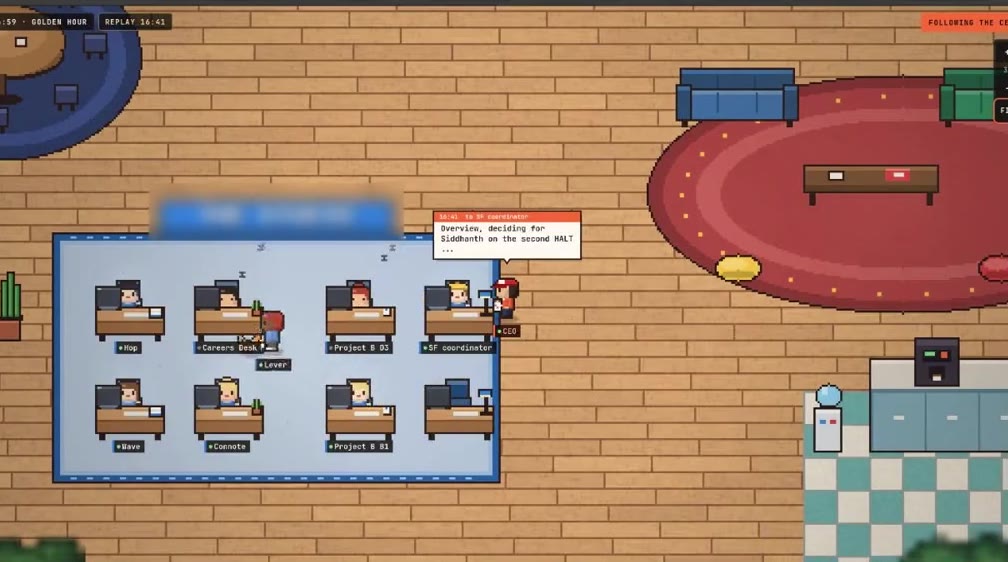
Every session is a person
Sessions sit at desks, grouped by project. When the overview session hands out work, the walk carries the real message to the desk it is for.
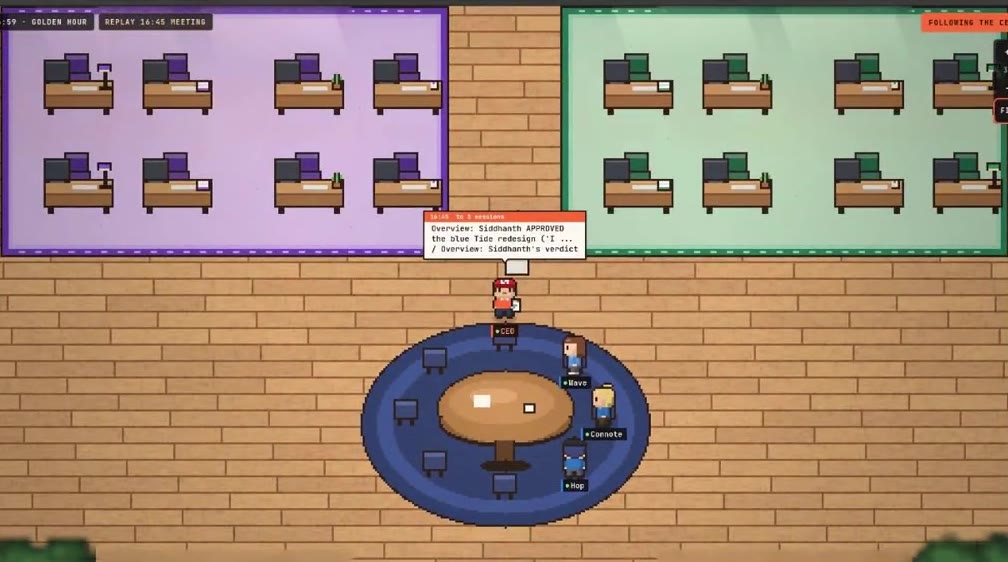
A meeting when many get the brief
Three or more sessions messaged within minutes gather at the round table.
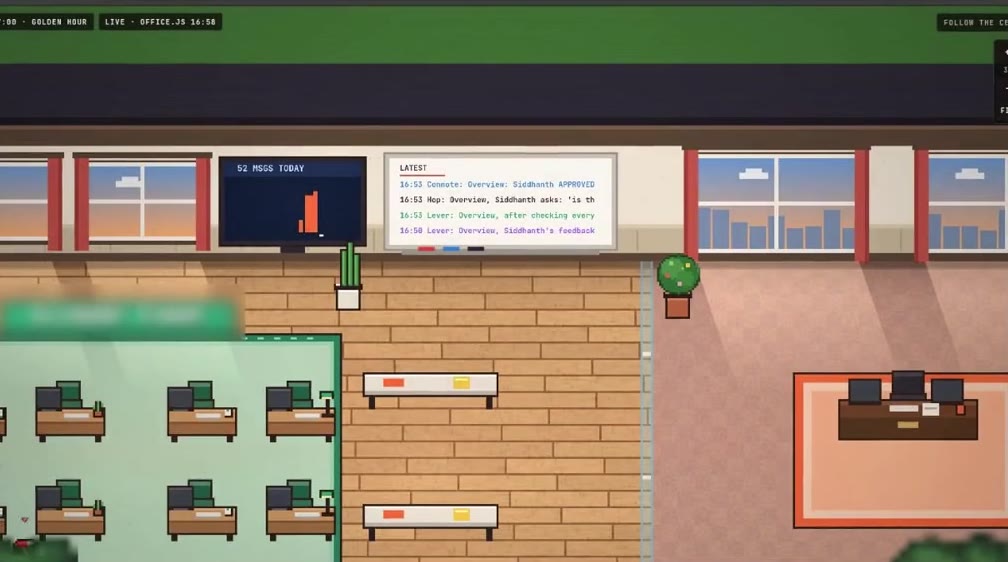
Whiteboard, state and pushes
The latest briefs on the whiteboard, each session working, idle or asleep at its desk, and confetti when work lands.
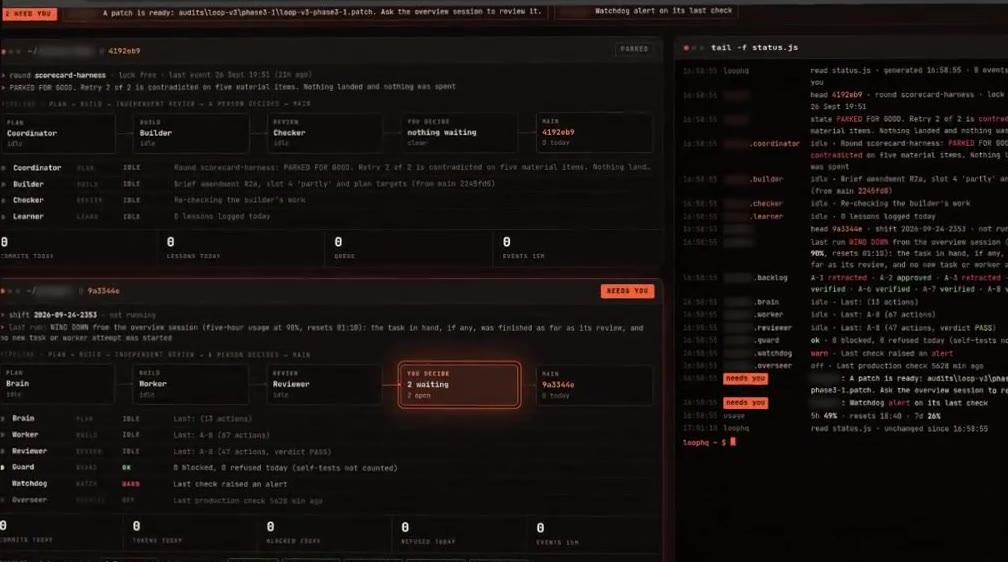
The same system, in a terminal
Plan, build, independent review, a person decides, then main, with a live feed of every change.
Real Loop HQ page, messages and data from 27 September. The walking is decorative.
technical specs
- One coordinating session holds the task list and sends each task to a local or cloud builder, then to an independent review and one fix round, then to a pull request.
- Continuous integration is the authority on whether a change passes. Merging waits for a person.
- Work runs in 30-minute sprints with a short checkpoint digest, so the person can steer without watching.
- Small scripts watch the repositories and the usage window and write the state Loop HQ shows. The status page reads each loop's logs and changes nothing in either repository.